Phy-SIM: Physiological Simulation, Integration, and Modeling Toolkit
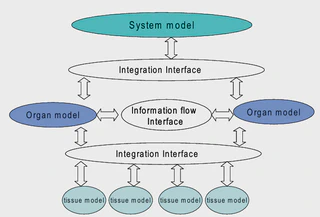 Phy-SIM framework overview.
Goals
Emergence of systems biology provided a comprehensive and integrative perspective to examine the function at the system level instead of focusing on the isolated parts. Integration of multilevel and multiscale physiological models is an important requirement for such a system-based approach. Mathematical models for physiological processes have been developed in all levels from cell, up to organs and organ systems. However, little has been done in the name of integrating individual models to comprehensively study the whole system. This is due to the complexity to integrate multiscale and multilevel models of independent physiological processes. Phy-SIM aims to build a software framework where the multilevel and multiscale models for the complex biological system can be integrated. Phy-SIM provides the software tools to model, integrate and simulate models of physiological processes from tissue level up to organism level.
Highlights
- Research highlights here…
